VINEYARDS

Kiatra Estate Vineyard

Farming Philosophy

We farm Kiatra as a living ecosystem—combining organic, biodynamic, and regenerative practices with precision viticulture to grow healthier vines and more expressive fruit.

Our approach begins with respect for the land. We work to build living soils, encourage biodiversity, conserve water, and create an environment in which the vineyard can remain healthy and resilient for generations.

We avoid synthetic fertilizers, herbicides, and pesticides, favoring thoughtful interventions that support the vineyard’s natural systems. Cover crops, compost, beneficial insects, and biodynamic preparations help strengthen the relationship between the soil, the vines, and the wider ecosystem.

Regenerative farming extends beyond individual practices. It is a long-term commitment to improving the health of the land while reducing our environmental impact—from emissions-free vineyard equipment and solar energy to water efficiency and more precise use of resources.

Precision Viticulture

Every Vine as an Individual Living Being

In organic and biodynamic farming, every plant must be observed and understood. Our approach to precision viticulture is both a technology and a farming ethos: caring for each vine as an individual living being rather than treating the vineyard as a uniform block.

Since Kiatra was planted, we have farmed it as a collection of individual vines—each with its own history, needs, and potential. In the early years, we walked the vineyard with a clipboard—and later a spreadsheet—observing and scoring every vine to ensure that each plant was healthy, balanced, and positioned to produce its best fruit.

Over the past five years, we have developed and integrated state-of-the-art sensors and AI-powered computer vision to understand the vineyard with even greater clarity. First deployed at Kiatra Estate, AgScout AMP is a first-in-class vineyard intelligence platform now used by leading winegrowers throughout California. In 2025, Scout Gen5 was named one of TIME’s Best Inventions of the year—recognition for technology rooted in our pursuit of better farming at Kiatra.

By monitoring vine health, vigor, fruit development, and yield, we gain a deeper understanding of the natural variation within the vineyard. This plant-level intelligence helps our farming team make more thoughtful decisions—from pruning and irrigation to canopy management, fruit thinning, and harvest—giving each vine the individual care it needs to reach its full potential.

“Our goal is to use precision viticulture to farm the highest-quality grapes from the healthiest vines—and clearly express their place.”

Plant-level intelligence helps us identify issues earlier, apply resources more precisely, improve fruit quality, and strengthen the long-term health of the vineyard. Technology does not replace the instincts of an experienced farmer. It helps us see the vineyard more clearly, combining generations of farming wisdom with plant-level intelligence to make better decisions from soil to glass.

In the Glass

How Farming Shapes the Wine

Our organic, biodynamic, and regenerative practices are not only about caring for the land. They directly influence the quality, character, and sensory expression of our wines—from the clarity of place and purity of the fruit to the balance, texture, and energy experienced in the glass.

01

A Clearer Expression of Place

By nurturing soil health, encouraging biodiversity, and minimizing chemical inputs, we rely more fully on the vineyard’s natural cycles. This allows the fruit to reflect the distinctive soil, climate, elevation, and aspect of its site with greater purity. The resulting wines have clarity and identity—a recognizable sense of place and vintage.

02

More Expressive Fruit

Living soils and diverse microbial communities support balanced vine growth and more consistent, flavorful fruit. This helps the grapes reach phenolic ripeness while retaining natural acidity and developing balanced tannins. In the glass, that can translate to brighter fruit, layered aromas, refined textures, depth, and freshness.

03

Fewer Clusters, Greater Concentration

We do not farm for maximum production or encourage the vines to overproduce. When necessary, we reduce the number of clusters carried by each vine, allowing it to direct its energy toward fewer grapes. This concentrates sugars, acids, and phenolics, contributing intensity, structure, and flavor density without sacrificing balance.

04

Purity from Vineyard to Cellar

We avoid synthetic fertilizers, herbicides, and pesticides, while emissions-free equipment eliminates diesel exhaust in the vineyard. This lighter touch protects the ecosystem and helps preserve the natural character of the grapes. When native fermentations are used, the vineyard’s indigenous yeasts and microbiome can further contribute aromatic and textural distinction.

Sensory Expression

A Clear Expression of Place and Time

Our farming practices directly impact the quality of our wines by more clearly revealing the attributes of a particular place and time—without chemical masking or alteration.

  • Greater aromatic lift
  • Brighter, more clearly defined fruit
  • Layered aromas and flavor complexity
  • A cleaner, more focused mid-palate
  • Softer, more integrated tannins
  • Natural freshness and energy
  • A finish that feels longer and more precise

The result is not simply greater intensity, but greater clarity: balanced, expressive wines with an identity rooted in the vineyard and the conditions of each vintage.

Independent Standards

Certified Farming

Kiatra Estate Vineyard is CCOF Certified Organic and Napa Green Certified standards that provide ongoing accountability for how we care for our vines, our land, and the people who farm it. We support these organizations who promote sustainable, responsible and environmental responsible farming.

California Certified Organic

Certification through California Certified Organic Farmers verifies that Kiatra is farmed according to rigorous organic standards, without synthetic fertilizers, herbicides, or pesticides. We applied for our certification when we planted our Kiatra vineyard in 2012.

Napa Green Certified Vineyard

Napa Green certification reflects our broader commitment to regenerative winegrowing—including soil health, biodiversity, climate action, water efficiency, and the well-being of the people who care for the vineyard.

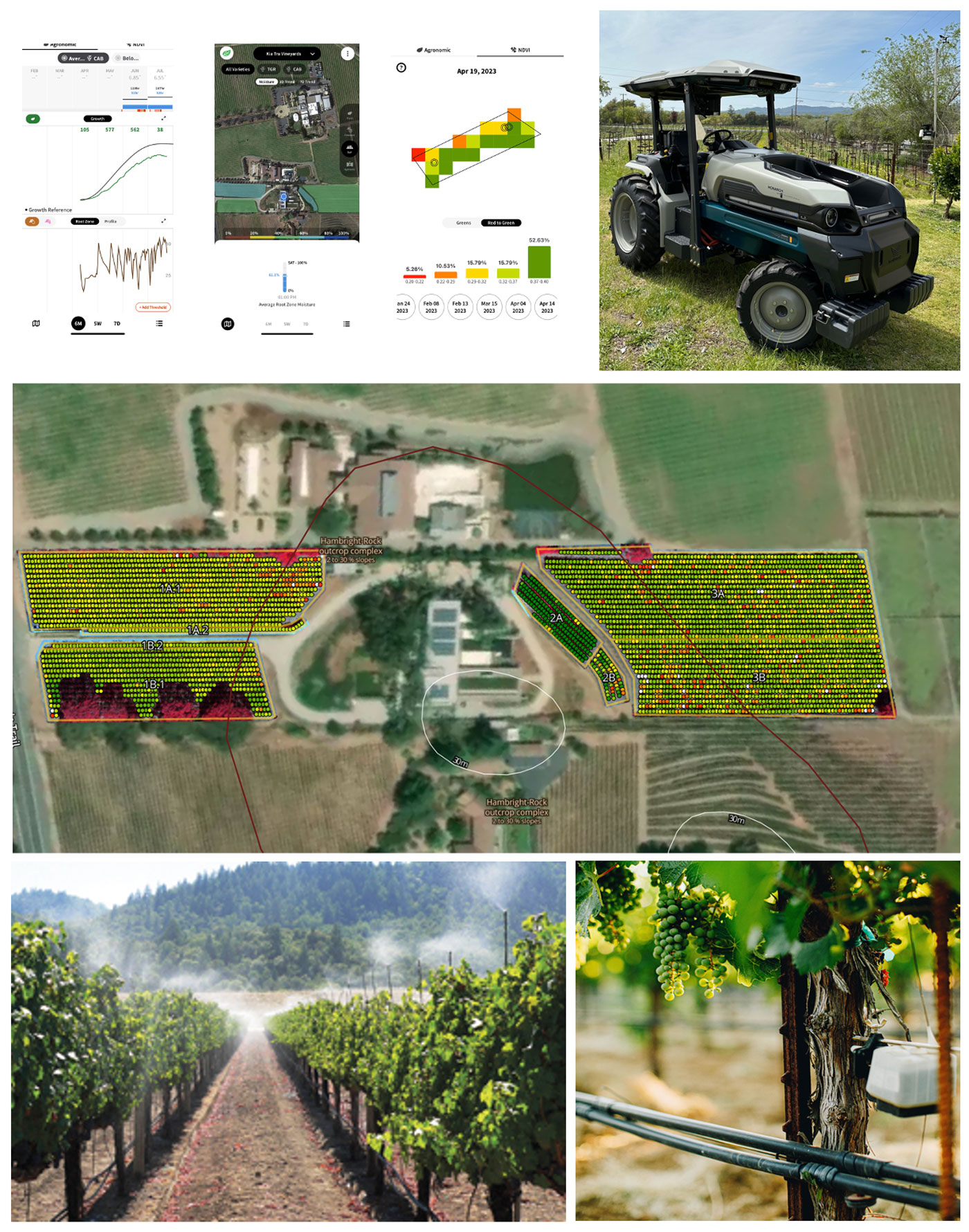
Scout precision-viticulture technology operating at Kiatra Estate Vineyard

Plant-Level Intelligence

Precision Farming, Powered by AI

Our approach to precision farming began with a simple belief: to realize the full potential of a vineyard, we must understand it at the level of the individual vine.

During the 2021 and 2022 growing seasons, we manually scouted every vine at Kiatra Estate three times—at approximately 50% veraison, before harvest, and after harvest. We evaluated fruit development, canopy vigor, vine health, and emerging issues, building a detailed record of where our farming could improve.

The challenging 2022 vintage demonstrated the value of this plant-level approach. During the September heat waves, we adjusted irrigation to help the vines remain hydrated and continue ripening. After the rain, we opened the fruit zone to improve airflow and sunlight exposure, then walked the entire vineyard vine by vine, removing small or compromised clusters affected by the heat.

Meaningful variation exists not only between vineyard blocks or rows, but from one vine to the next.

This level of observation is uncommon because it is extraordinarily time-consuming. In 2021, NEOTEMPO co-founder Kia Behnia attended the UC Davis Wine Executive Program, where he met Professor Mason Earles. Their shared interest in applying artificial intelligence and plant-level intelligence to winegrowing led them to establish Scout, an AI-powered precision-farming platform.

Scout combines advanced sensors, computer vision, and artificial intelligence to observe every accessible vine consistently throughout the growing season. It helps our farming team monitor vine health, canopy development, fruit growth, and yield; recognize patterns that can be difficult to see from the ground; and determine where individual plants or areas may need attention.

150,000+ vineyard images captured and analyzed at Kiatra Estate in 2024

Scout has been used at Kiatra Estate since the 2023 growing season, creating a plant-level record that helps us learn from every vine and every vintage.

The technology does not replace the knowledge or intuition of an experienced farmer. It provides another way of seeing—giving our team better information to guide decisions about pruning, irrigation, canopy management, fruit thinning, and harvest.

We harvest data as thoughtfully as we harvest grapes: to farm more precisely, respond earlier, strengthen the vineyard’s resilience, and bring the clearest possible expression of Kiatra into every wine.

KIATRA VINEYARDS

Select a block for more detail information

Technical Details

The Kiatra vineyard lies at the southern end of the renowned Napa Valley just minutes south of the Stags Leap AVA and Yountville AVA and east of the Oak Knoll AVA. Viticulture at this site goes back to 1850’s with active vineyards over the last 40 years.

At this site the grape growing season is longer—cooler in summer than the warmer Upper Valley and drier in winter allowing soils to warm earlier in the spring. The marine influence is strong here with foggy mornings and cool summer nights. Summer daytime temperatures can average 10°F cooler than St. Helena. This creates the longest growing season in the valley, providing early bud break and a long, leisurely growing season for optimal, balanced ripeness. The cooler nights and slowly rising daytime temperatures create a naturally long hang time for fruit to achieve bright acidity, great texture, fruit-forward aromas and elegant flavors.

Block 1a: East (67°) to West (274.5°)
Block 1b: East (67°) to West (274.5°)
Block 2a: Northeast (25°) to Southwest (240.5°)
Block 2b: Northeast (25°) to Southwest (240.5°)
Block 3a: East (67°) to West (274.5°)
Block 3b: East (67°) to West (274.5°)

Block 1a:Haire loam with some outcrop complex
Block 1b: Haire loam with some clay
Block 2a: Outcrop complex
Block 2b: Outcrop complex
Block 3a: Haire loam
Block 3b: Haire loam

Block 1a: Cabernet Sauvignon: Clone 412 on Rootstock: 1616c
Block 1b: Cabernet Sauvignon: Clone 412 on Rootstock: 1616c
Block 2a: Cabernet Sauvignon: Clone 338 on Rootstock: Schwartsman
Block 2b: Cabernet Sauvignon: Clone 338 on Rootstock: Schwartsman
Block 3a: Cabernet Sauvignon: Clone 338 on Rootstock: Schwartsman
Block 3b: Cabernet Sauvignon: Clone 685 on Rootstock: Schwartsman
HAIRE LOAM WITH CLAY
OUTCROP COMPLEX